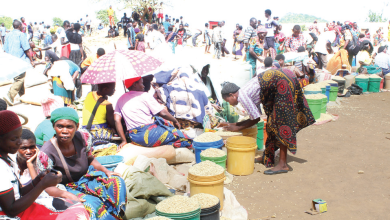
Fisher Daniel Chikuse from Kunkhongo Village, Traditional Authority Maganga in Salima District says plastic waste has become an unwelcome companion during fishing.
He said discarded plastics frequently get entangled in fishing gear and often outnumber fish in his catch, reducing catches over the years.
“Plastic papers are all over; some dumped from the shores and some come from surrounding rivers. I do not know how we can beat the plastics,” said Chikuse.
A few kilometres away at Kambiri beach, another fisher Chikumbutso Labson shares a similar story. He casts his fishing gear into the lake almost every day, but says the returns have been diminishing over time.
Labson said his catch includes plastic bottles, thin plastic bags and other waste materials. “The fish catch has been declining. Oftentimes, we have a tough time sorting fish from the plastics. This is our own making because we throw these plastics in the lake,” he said.
The National Biodiversity Strategy and Action Plan (NBSAP) III has identified pollution and inadequate waste management as major drivers of environmental degradation and biodiversity loss in Malawi.
For fishermen along the shores of Lake Malawi, the effects of plastic pollution are no longer a distant environmental concern, but a part of daily life.
The concerns raised by the fishermen echo findings contained in NBSAP III which estimates that Malawi generates about 75 000 tonnes of plastic waste annually.
About 80 percent or 60 000 tonnes is single-use plastic that is not recycled and is often disposed of indiscriminately.
The strategy launched last week warns that plastic waste pollutes land and waterways and can persist in the environment for decades.
Microplastics are now accumulating in Lake Malawi’s aquatic habitats, threatening the lake’s more than 1 000 unique fish species and other endemic biodiversity.
The plan, which runs between 2025 and 2025, says Lake Malawi remains a crucial source of fish with a total fish catch landing of 195 521.91 metric tonnes or 92.6 percent of Malawi’s total fish catches.
However, it warns that increasing human populations and improper disposal of plastics are among the factors contributing to the degradation of fish habitats.
Beyond the country’s water bodies, poor waste management is becoming increasingly visible in urban centres.
The strategy notes that major cities generate large volumes of solid waste. Lilongwe and Blantyre alone produce hundreds of tonnes of waste every day, much of which is dumped at open sites or burned, releasing harmful pollutants into the air, soil and water.
Only a fraction of the waste generated is collected. In Blantyre, for example, about 450 tonnes of waste are produced daily yet less than 30 percent is collected by municipal authorities, leaving large amounts to find their way into natural ecosystems.
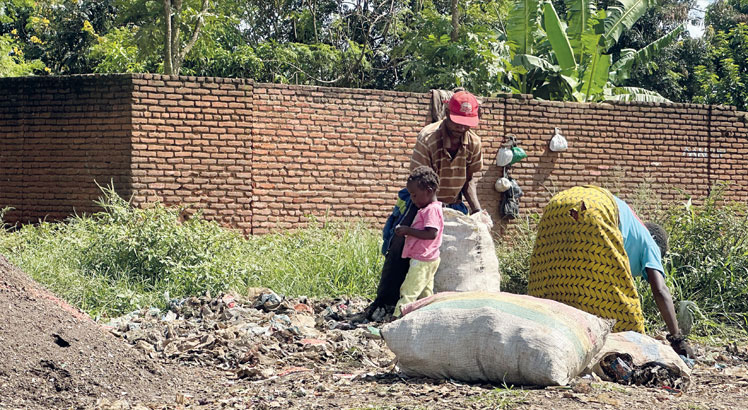
In Lilongwe’s Area 36, Muweluzeni Charles lives just metres away from a growing garbage dump used by surrounding communities.
For him and his family, the pile of waste has become a source of discomfort and concern.
Charles fears the dump poses health risks, but says he has little power to stop people from disposing waste there.
“I live with this smell every day. People extract manure from the garbage which lessens the pile. I don’t think Lilongwe City Council does anything to reduce this burden,” he said.
Civil Society Network on Climate Change (Cisonec) national coordinator Julius Ngoma has described plastic pollution as a growing crisis that requires urgent intervention.
He said it is unfortunate that despite the ban on the manufacture of thin plastics, the country continues to struggle with plastic waste that could largely be avoided.
“It has been a difficult journey since 2015 when government introduced plastic regulations and a ban on thin plastics. Ten years later, we expected a better situation, but we have yet to bring the problem under control, posing significant challenges,” said Ngoma.
Principal Secretary in the Ministry of Natural Resources Misheck Munthali acknowledged the fight against thin plastics remains challenging despite an existing ban.
“For the last month, we intensified confiscation of plastics shops. We are experiencing porous borders and most of the plastics come from neighbouring countries that continue to produce. We are collaborating with district and city councils to enforce this exercise,” he said.